Compressed Air Efficiency Audits | Compressed Air Flow Testing | Compressor Testing | Compressed Air Leak Detection

 |
 |
 |
 |
 |
 |
 |
 |
 |
|||
 rned standard.
  The design will be carried out in such a method as to optimise the performance and reduce the operating costs for the system(s).
 The legislation contained on this web site is subject to Crown Copyright protection. It may be reproduced free of charge provided that it is reproduced accurately and that the source and copyright status of the material is made evident to users.
  following means
Compressed Air Efficiency Audits
Reduce Your Operating Costs and Carbon Footprint.
Compressed air is a very useful and versatile power source. However, if the system is not correctly managed, it will become inefficient and expensive to run as well as increasing your carbon footprint. It is essential that a system is monitored to ensure that it is operating correctly and efficiently. Following a Maxaura audit, operating cost reductions are usually found to be between 23 and 45% and pay back periods are often less than 12 months.
Only that which is measured can be managed.
The heart of all Maxaura’s efficiency studies and flow monitoring projects are measured facts.
Every compressed air system comprises five principal facets: generation, control, treatment, distribution and usage. The Maxaura Vision programme is modular and can look at all, or any, combination of these facets.
We carry out full system efficiency audit work on all types of compressed air systems.
The technical audit and analysis is normally a combination of four measurement programmes
a) In-Line Compressed Air Flow Monitoring (system and equipment usage).
b) Compressor Performance Verification Testing.
c) Compressor Electrical Power Monitoring.
d) Ultrasonic Leak Detection.
and a study on how the compressed air is used and how its usage can be reduced by the utilisation of alternative, more economical technologies.
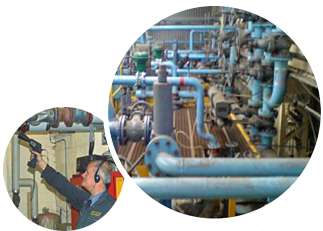
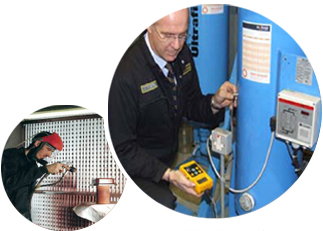
Leak detection surveys are conducted using an ultrasonic leak detector to pin point the leaks from the system, the location of the leaks would be marked on your drawing and each one would be given a reference number. A tag indicating the nature of the leak would also be fixed to the system as close as possible to the source of the leak. The leaks would also be tabulated giving an approximation of the size of each of the leaks so that their repair can be prioritised.
 Flow measurement is carried out using insertion turbine flow meters that are inserted into your system under pressure, so we do not interrupt your production. The meters record the flow, pressure and temperature every 2 seconds for a period, nominally one week, so that all the ‘events’ in these systems are recorded, and stored electronically, in our Maxlog data logger.
The information is downloaded from the Maxlogs and time related graphs are electronically prepared, illustrating the actual system usage flow, relative to real time, over the test period.

Where multiple flow meters are installed on a site, the flows and pressures recorded by each meter can be displayed simultaneously using the specially designed Maxaura Loganal software. This allows the data to be analysed to see the effects of changes in demands in different areas of the system, relative to the overall site demands. Areas of high usage are clearly illustrated along with the change in their demand patterns at varying production rates.

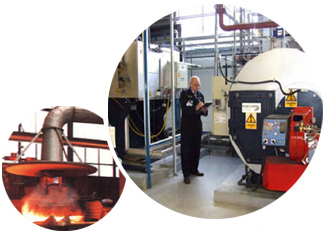
Compressor performance verification is conducted in accordance with ISO 1271 and the latest Pneurop standards. These tests establish the full and part load capacity of the compressor and its full, part and off load power consumptions. This information allows the specific power consumption and performance characteristics of each of the machines to be determined. The measurement of the principal parameters within the machine during the test helps to identify any aspects that require maintenance or adjustment.

Electrical power monitoring is conducted using portable power analysers to determine the total power consumption of the system to generate the compressed air as well as the power consumption of each of the individual compressors. Should any odd characteristics be determined then further in-depth analysis of the machine’s power consumptions can be conducted.
 A detailed survey of the installed air treatment equipment and distribution system is conducted, to determine whether the correct treatment equipment is being used to meet the site’s requirements and that it is sized and operating correctly. The performance and losses of the individual components are measured where necessary. The sizing and location of storage vessels is assessed and the sizing and routing of the distribution pipework is reviewed, considering the existing and predicted future requirements. If the in-line flow measurements or/and audible survey indicate that there are leaks from the system, then a leak detection survey is conducted using an ultrasonic leak detector to pin-point any leakage.

On completion of the data-gathering phase of the audit, the measured data is analysed in
conjunction with the information observed on site and any known changes in duty that are
predicted for the system. The measured systems flows, compressor performances and control philosophy are entered into Maxaura’s compressed air system simulation programme, CASCA. This programme allows a simulation of how the system is operating against the actual measured 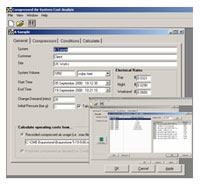 flows, which is validated against the measured system power consumption. The programme determines the predicted operating cost for the system if any of the recommended remedial activities are implemented, whether these be improving the performance of the existing compressors, installing new compressors, changing the control philosophy, reducing the system leakage, changing the distribution system, changing the stored volume or efficiency gains on the air usage.
The audit culminates in a report of the measured findings, observations and recommendations on the ‘way forward’ for improving the efficiency of the system and reducing your operating costs and carbon footprint. It will include a complete strategy for the improvements that are recommended, giving budgetary costs and pay-back periods for the recommended actions in an itemised and prioritised schedule.
Making objective decisions about changes to a system, or taking corrective action, is made easier when one is in possession of detailed measured facts. This audit programme addresses this requirement. The principles of successfully managing the cost of compressed air are no different to any other facet of your business cost control.
Downloads
 |
 |
 You will need Adobe Reader installed to view these documents, install it free by clicking the logo on above if required.


Systems House, Kitchener Road, High Wycombe, Bucks. HP11 2SW UK
tel. +44 (0)1494 512233 fax. +44 (0)1494 512131 e. info@maxaura.co.uk